Artisan Stories
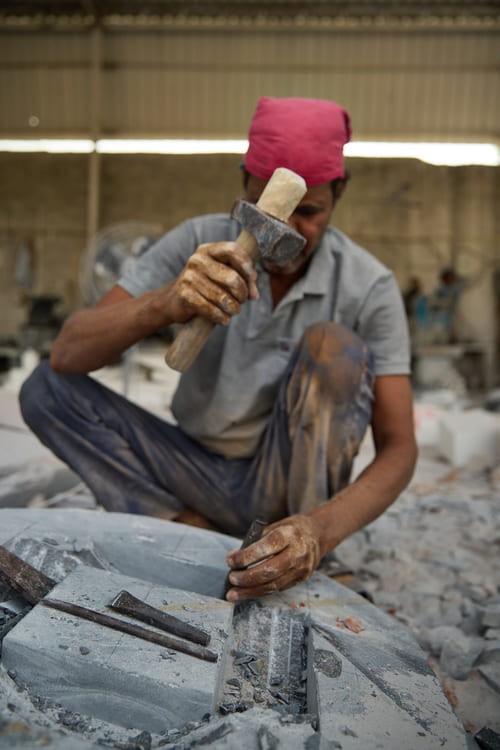
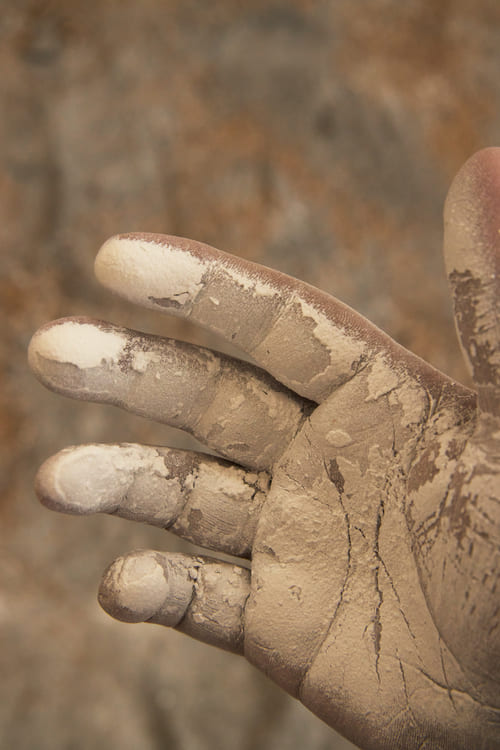
A space to honour the hands that hold our heritage. These are stories shaped in stone yards and studio corners, where patience meets precision and tradition meets touch. Through portraits, textures, and timeworn tools, we trace the human imprint behind every vessel. This is not just about how something is made. It is about who makes it, and what it means to them.
Artisan Stories
A space to honour the hands that hold our heritage. These are stories shaped in stone yards and studio corners, where patience meets precision and tradition meets touch. Through portraits, textures, and timeworn tools, we trace the human imprint behind every vessel. This is not just about how something is made. It is about who makes it, and what it means to them.
The
Process
A visual ode to the makers behind the craft — this series captures the intimate, often unseen moments where hands bring ideas to life. Through close portraits and raw textures, it celebrates the beauty of creation, labor, and human touch.
01
Procurement
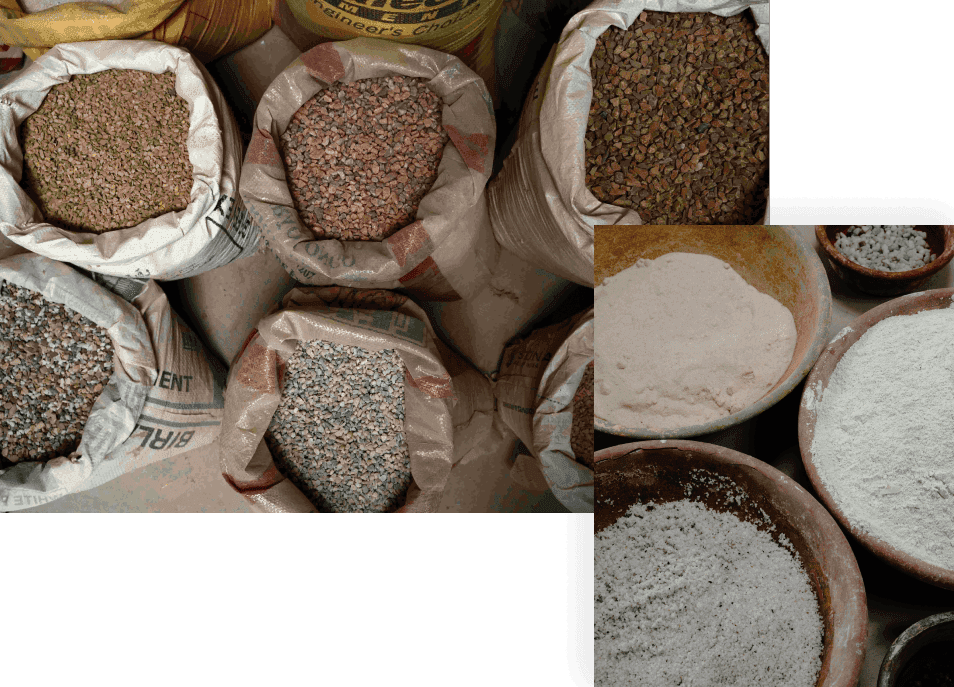
Every vessel begins not with form but with fragments. Cement, marble chips, pigments, each is chosen with care, sourced for its strength, tone, and character. Procurement is not simply supply; it is selection, a deliberate act of bringing together elements that will one day hold water, light, and space. Each particle carries within it a future of resilience, endurance, and beauty.
02
Mixing
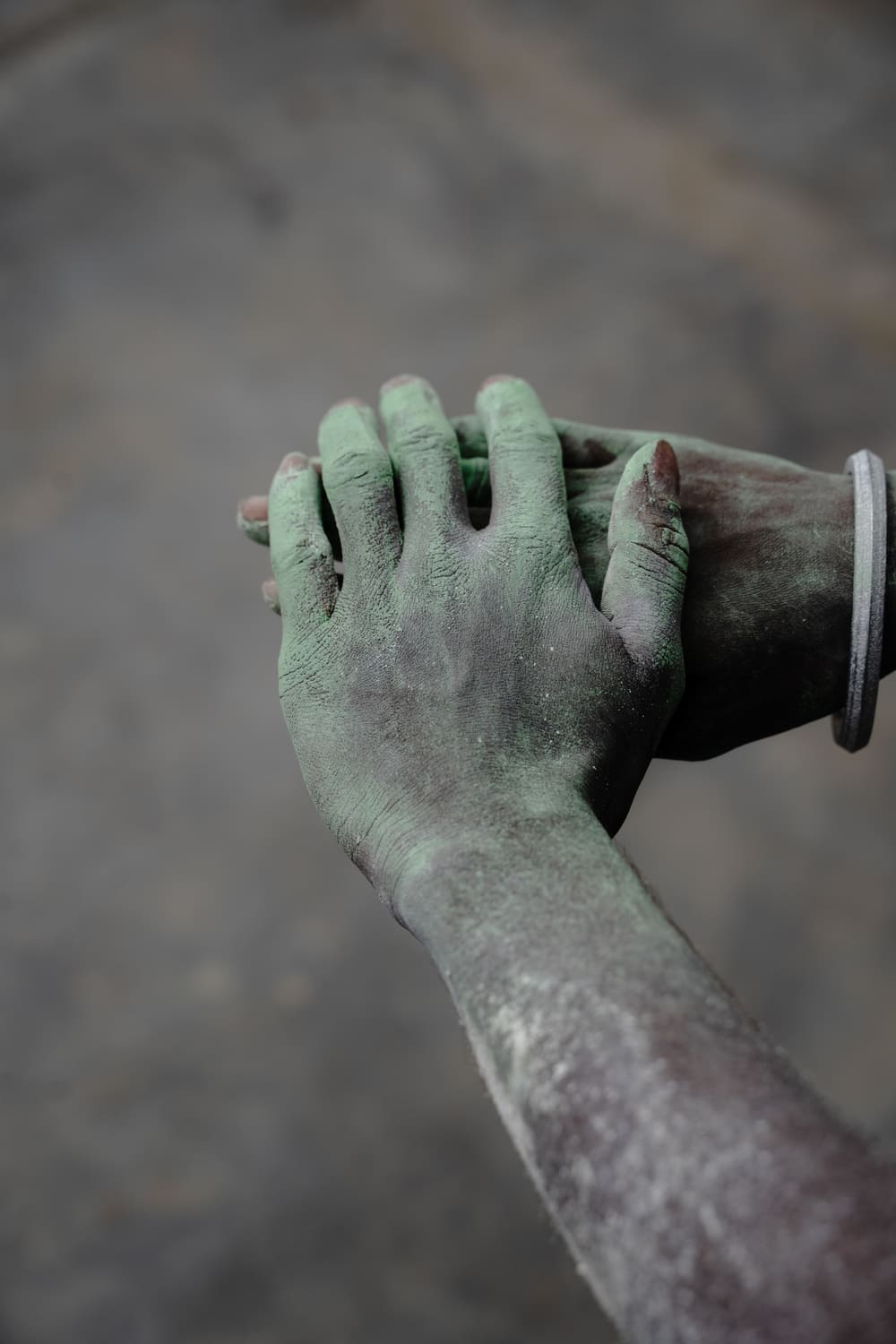
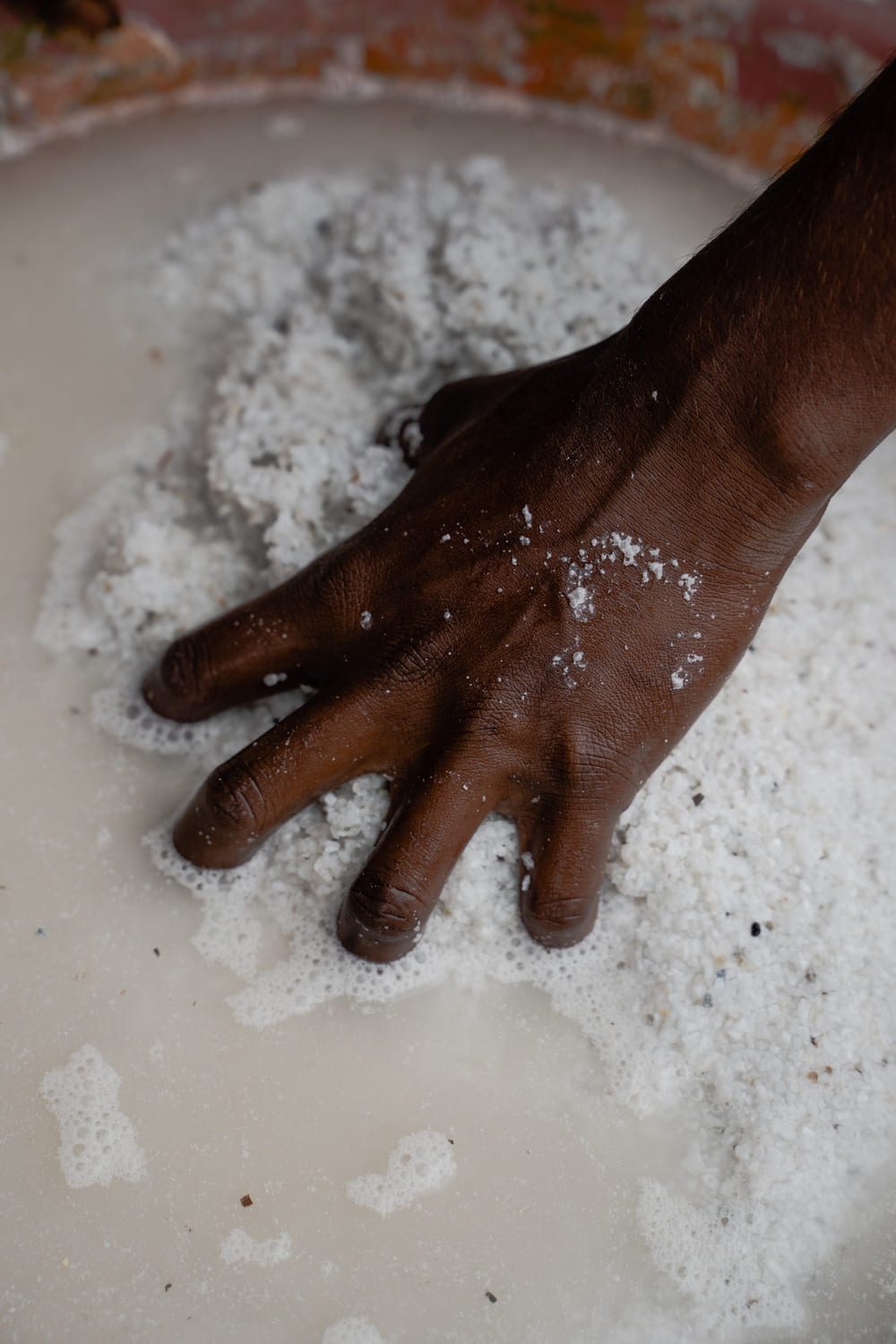
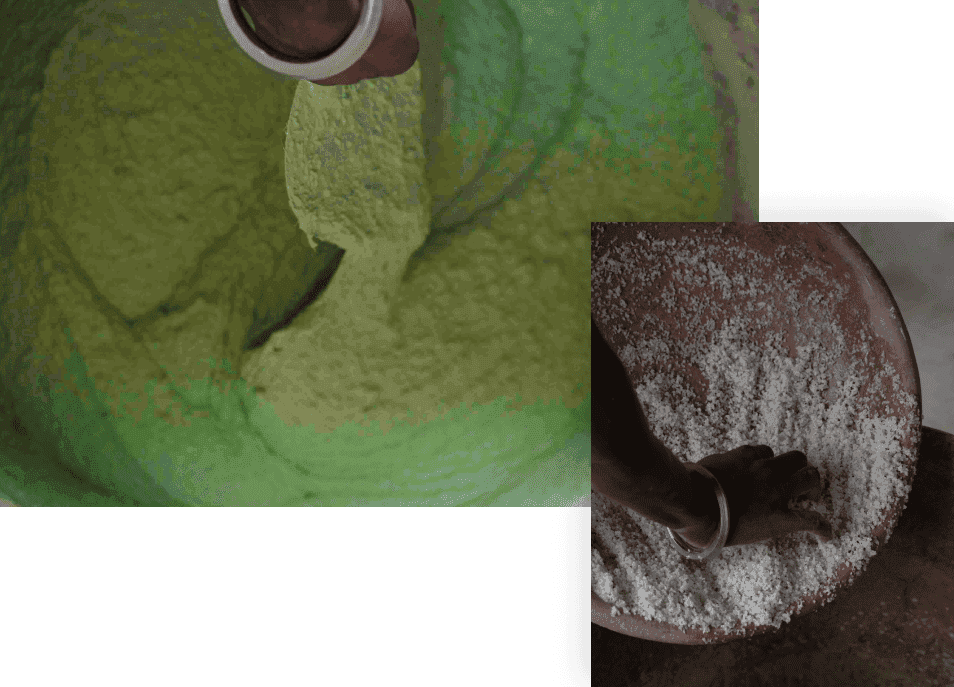
The raw is transformed through rhythm. Water meets powder, pigments seep into white, and marble chips disperse into the body of the paste. Mixing is tactile: the hand feels when the blend is too coarse, too dry, or just right. It is not simply chemistry, but an instinct honed over time, when to fold, when to pause, when the material is ready to move forward.
03
Casting
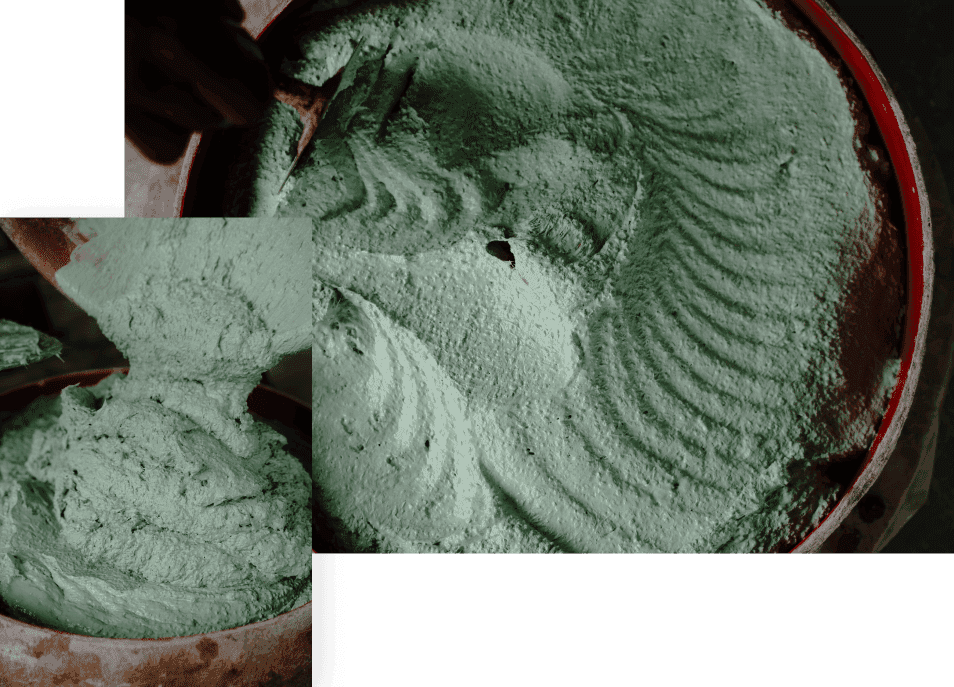
With the mix alive, the mould becomes stage and structure. Paste is poured, tapped, and smoothed into corners and curves. Casting is an act of quiet choreography, where chance is balanced with control. Each pour carries intent: to let the material find its rest while still guiding it toward its destined geometry. Here, concrete is given form, though not yet presence.
04
Curing
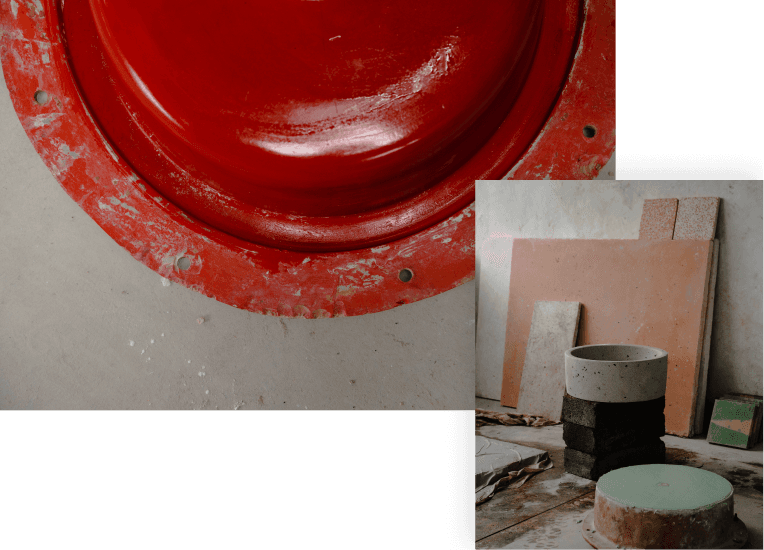
If casting is intent, curing is patience. Days stretch as water and cloth preserve moisture, preventing cracks and coaxing strength. Time is the unseen artisan here, hardening what was once fragile. It is a stage where nothing appears to happen, yet everything essential unfolds. To cure is to trust, to allow material to become itself.
05
Demoulding & Detailing
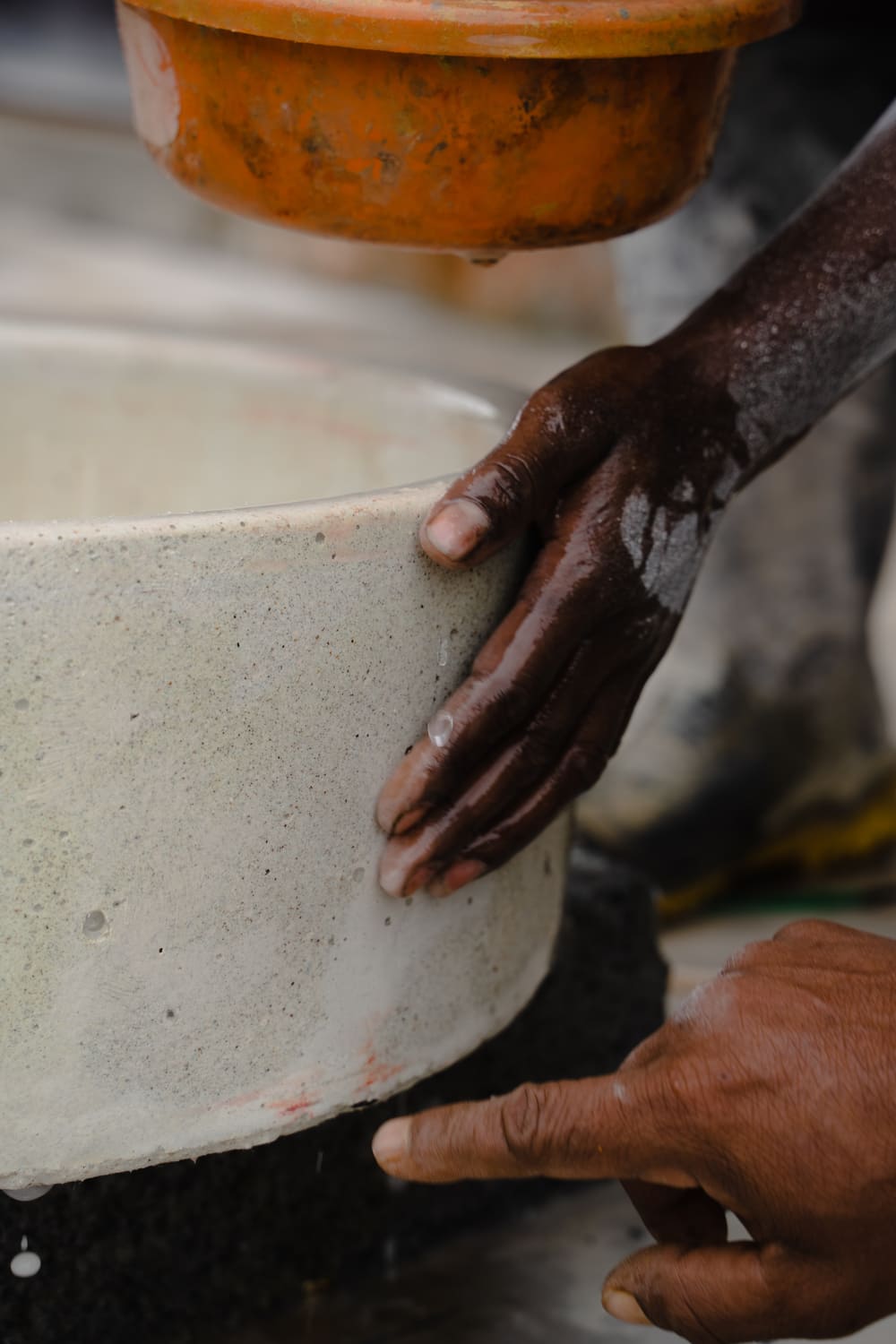
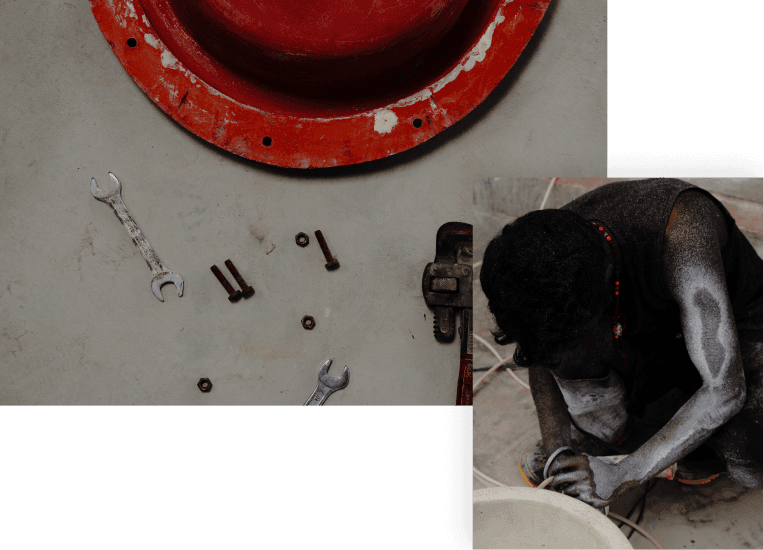
Lifting the mould is a moment of revelation. The vessel emerges raw, marked by pores and edges that hold traces of its liquid past. Demoulding reveals not the final form, but the possibility of it—steady, tangible, awaiting refinement. Then hands return with precision: pores are filled, edges softened, surfaces studied with care. Detailing is where craft overtakes process, where artisans decide what to erase and what to preserve, revealing clarity while honoring the material’s honesty.
06
Rubbing & Polishing
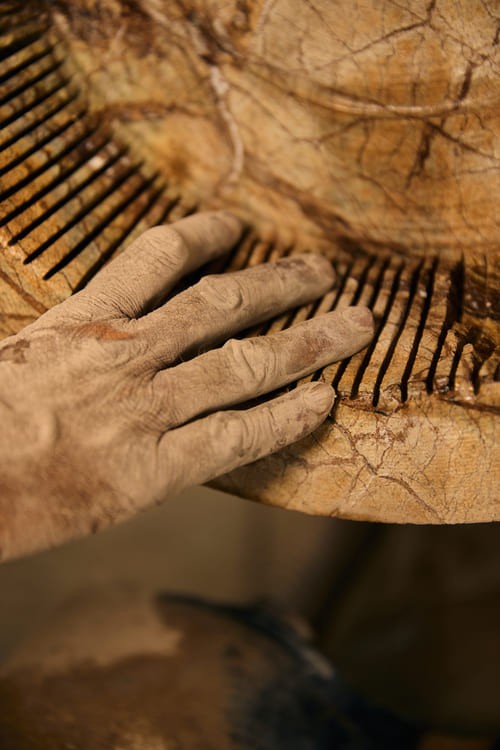
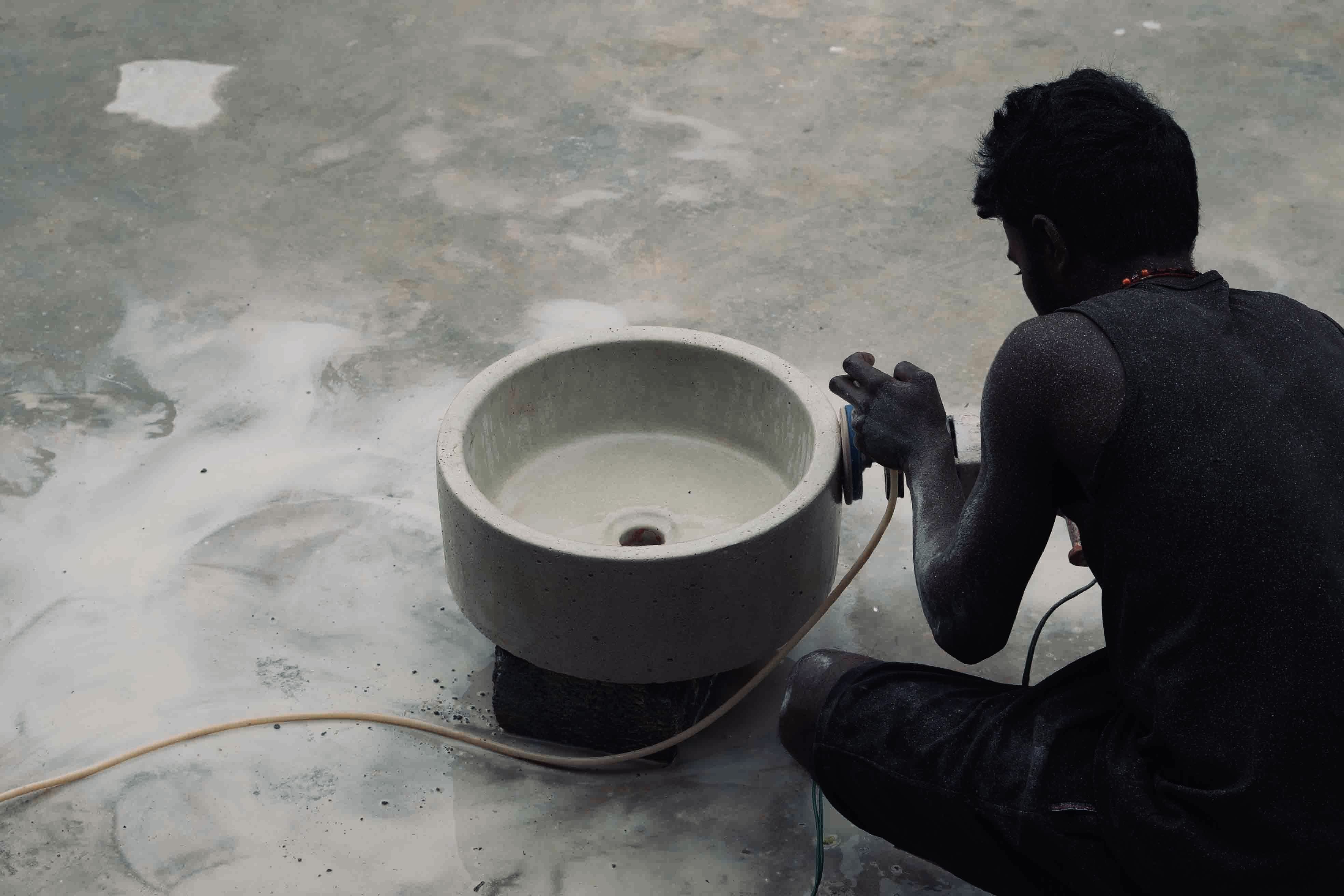
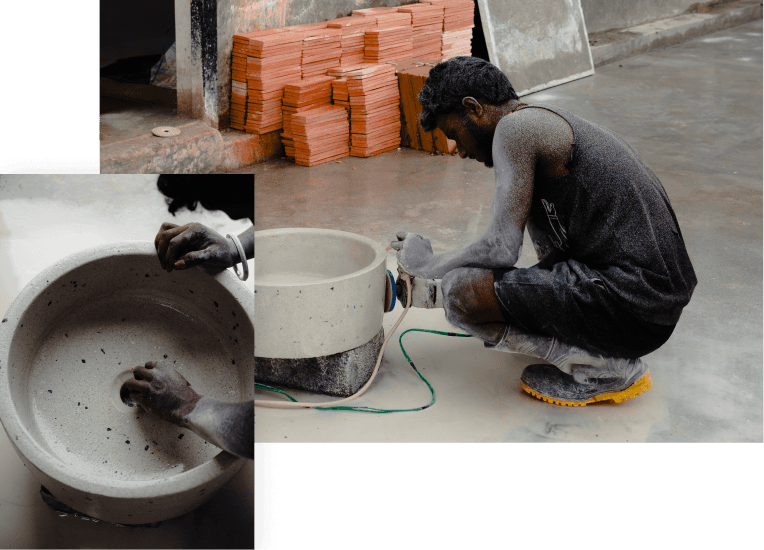
Finally, friction and patience bring the surface to life. Layers are rubbed down, textures smoothed, and light begins to catch in unexpected places. What was once matte grows luminous; what felt industrial turns intimate. Polishing is both ending and beginning, the moment the vessel is ready to leave the studio and enter the world, carrying with it the quiet memory of every hand and every pause. In each Anara piece, concrete is not just a material. It reminds us that beauty is not found in speed, but in patience and in the quiet care of hands.
The Process
A visual ode to the makers behind the craft — this series captures the intimate, often unseen moments where hands bring ideas to life. Through close portraits and raw textures, it celebrates the beauty of creation, labor, and human touch.
01
Procurement
Every vessel begins not with form but with fragments. Cement, marble chips, pigments, each is chosen with care, sourced for its strength, tone, and character. Procurement is not simply supply; it is selection, a deliberate act of bringing together elements that will one day hold water, light, and space. Each particle carries within it a future of resilience, endurance, and beauty.
02
Mixing
The raw is transformed through rhythm. Water meets powder, pigments seep into white, and marble chips disperse into the body of the paste. Mixing is tactile: the hand feels when the blend is too coarse, too dry, or just right. It is not simply chemistry, but an instinct honed over time, when to fold, when to pause, when the material is ready to move forward.
03
Casting
With the mix alive, the mould becomes stage and structure. Paste is poured, tapped, and smoothed into corners and curves. Casting is an act of quiet choreography, where chance is balanced with control. Each pour carries intent: to let the material find its rest while still guiding it toward its destined geometry. Here, concrete is given form, though not yet presence.
04
Curing
If casting is intent, curing is patience. Days stretch as water and cloth preserve moisture, preventing cracks and coaxing strength. Time is the unseen artisan here, hardening what was once fragile. It is a stage where nothing appears to happen, yet everything essential unfolds. To cure is to trust, to allow material to become itself.
05
Demoulding & Detailing
Lifting the mould is a moment of revelation. The vessel emerges raw, marked by pores and edges that hold traces of its liquid past. Demoulding reveals not the final form, but the possibility of it—steady, tangible, awaiting refinement. Then hands return with precision: pores are filled, edges softened, surfaces studied with care. Detailing is where craft overtakes process, where artisans decide what to erase and what to preserve, revealing clarity while honoring the material’s honesty.
06
Rubbing & Polishing
Finally, friction and patience bring the surface to life. Layers are rubbed down, textures smoothed, and light begins to catch in unexpected places. What was once matte grows luminous; what felt industrial turns intimate. Polishing is both ending and beginning, the moment the vessel is ready to leave the studio and enter the world, carrying with it the quiet memory of every hand and every pause. In each Anara piece, concrete is not just a material. It reminds us that beauty is not found in speed, but in patience and in the quiet care of hands.
The Process
A visual ode to the makers behind the craft — this series captures the intimate, often unseen moments where hands bring ideas to life. Through close portraits and raw textures, it celebrates the beauty of creation, labor, and human touch.
01
Procurement
Every vessel begins not with form but with fragments. Cement, marble chips, pigments, each is chosen with care, sourced for its strength, tone, and character. Procurement is not simply supply; it is selection, a deliberate act of bringing together elements that will one day hold water, light, and space. Each particle carries within it a future of resilience, endurance, and beauty.
02
Mixing
The raw is transformed through rhythm. Water meets powder, pigments seep into white, and marble chips disperse into the body of the paste. Mixing is tactile: the hand feels when the blend is too coarse, too dry, or just right. It is not simply chemistry, but an instinct honed over time, when to fold, when to pause, when the material is ready to move forward.
03
Casting
With the mix alive, the mould becomes stage and structure. Paste is poured, tapped, and smoothed into corners and curves. Casting is an act of quiet choreography, where chance is balanced with control. Each pour carries intent: to let the material find its rest while still guiding it toward its destined geometry. Here, concrete is given form, though not yet presence.
04
Curing
If casting is intent, curing is patience. Days stretch as water and cloth preserve moisture, preventing cracks and coaxing strength. Time is the unseen artisan here, hardening what was once fragile. It is a stage where nothing appears to happen, yet everything essential unfolds. To cure is to trust, to allow material to become itself.
05
Demoulding & Detailing
Lifting the mould is a moment of revelation. The vessel emerges raw, marked by pores and edges that hold traces of its liquid past. Demoulding reveals not the final form, but the possibility of it—steady, tangible, awaiting refinement. Then hands return with precision: pores are filled, edges softened, surfaces studied with care. Detailing is where craft overtakes process, where artisans decide what to erase and what to preserve, revealing clarity while honoring the material’s honesty.
06
Rubbing & Polishing
Finally, friction and patience bring the surface to life. Layers are rubbed down, textures smoothed, and light begins to catch in unexpected places. What was once matte grows luminous; what felt industrial turns intimate. Polishing is both ending and beginning, the moment the vessel is ready to leave the studio and enter the world, carrying with it the quiet memory of every hand and every pause. In each Anara piece, concrete is not just a material. It reminds us that beauty is not found in speed, but in patience and in the quiet care of hands.
Artisan Gallery